Change in Scope
After last week, where I learned how to use the Hammer 5 engine, I’ve realised that I probably shouldn’t limit myself to a Wingman map (2v2 bomb defusal). Given I have almost 2 months to work on this project, a standard 5v5 map should not be out of scope.
Although I am going to change the size and scope of the map, I won’t be changing theme. Part of this decision comes from an evaluation of my previous Wingman layout that I created on this post. When I started to formulate ideas of how this would play in game, I came to the unfortunate conclusion that the interactions between teams would probably be boring. With a more elaborate and well planned 5v5 map, this should not be the case.
Researching 5v5 Maps
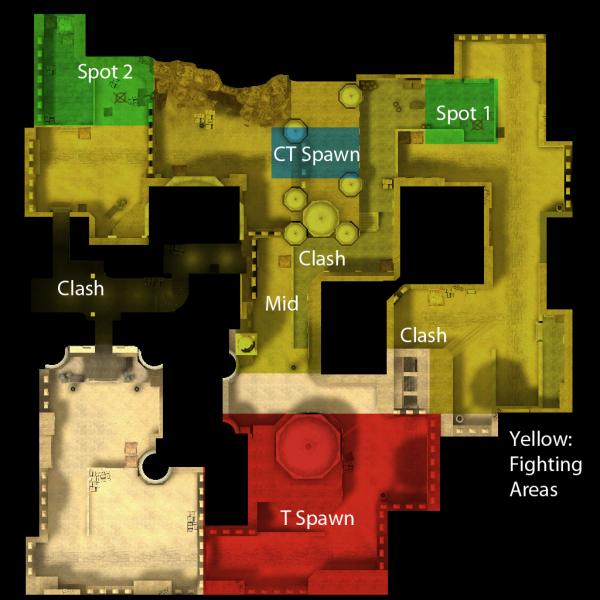
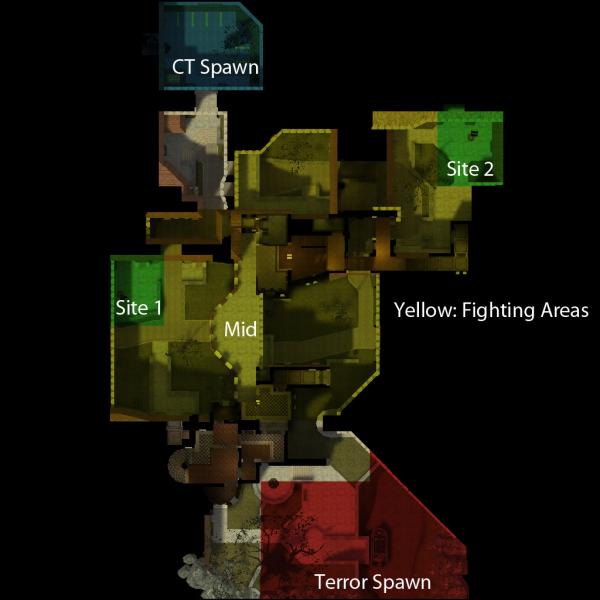
These images are taken from this tutorial for creating Counter-Strike maps. Despite it being 13 years old, it covers concepts that are still entirely relevant for modern Counter-Strike (Dust 2 is still almost entirely unchanged to this day). The main takeaway from this post is to focus on player interaction; the teams should meet at certain points in the map and ‘clash’. This terminology is not used often anymore, however the idea behind it is relevant.
Planning for a Larger Map
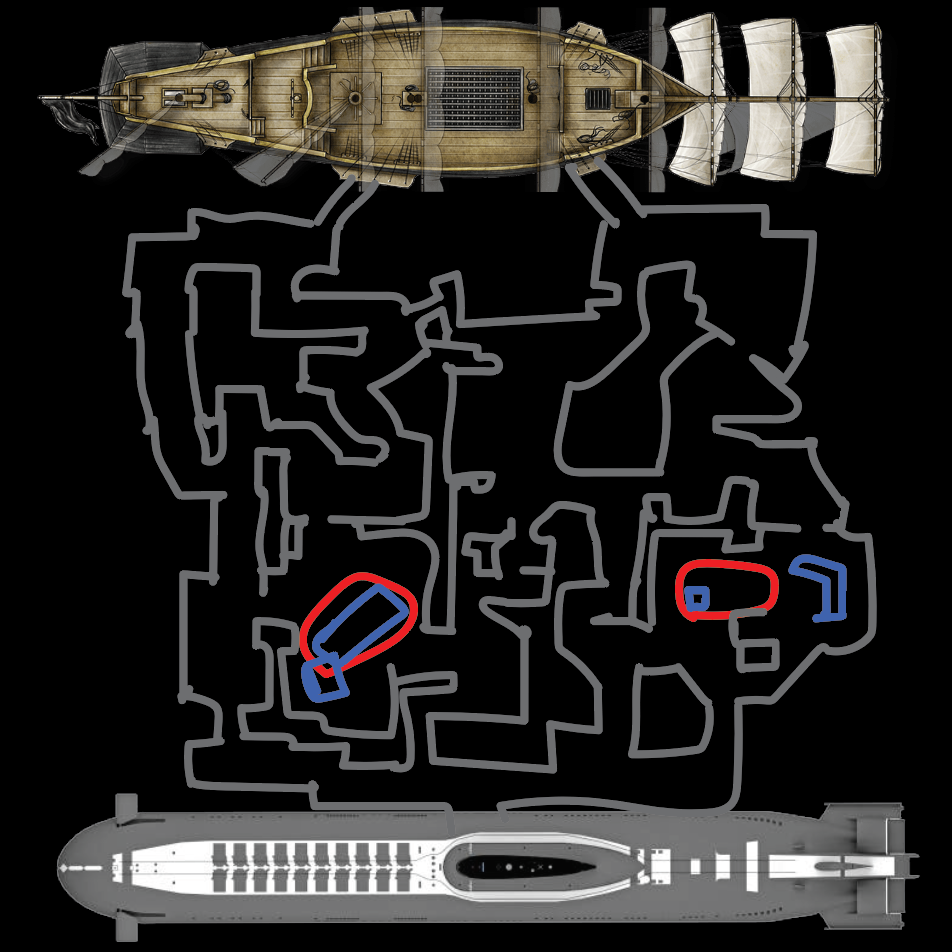
Using the basic two site and middle concept that the majority of Counter-Strike maps employ, I have created a rough layout for the map which should help me put together a basic prototype in engine.
As with all Counter-Strike maps, the Counter-Terrorists have a shorter path to both bomb sites, allowing them to position themselves ready for the Terrorists to attack.
Site A (left in the drawing) has two entrances from T spawn and one from middle, with site B only having one entrance from T spawn and middle.
This difference in entrances for each site creates a different dynamic when attacking and defending either. For example, A site will be easier to attack, considering there are more paths to infiltrate from. On the other hand, site B will be easier to defend, as there are less entrances to hold.
In the annotated diagram, I have located where I believe fights will happen. It’s important I mark these down early so I can structure the obstacles and layout to promote fights that aren’t too one sided.
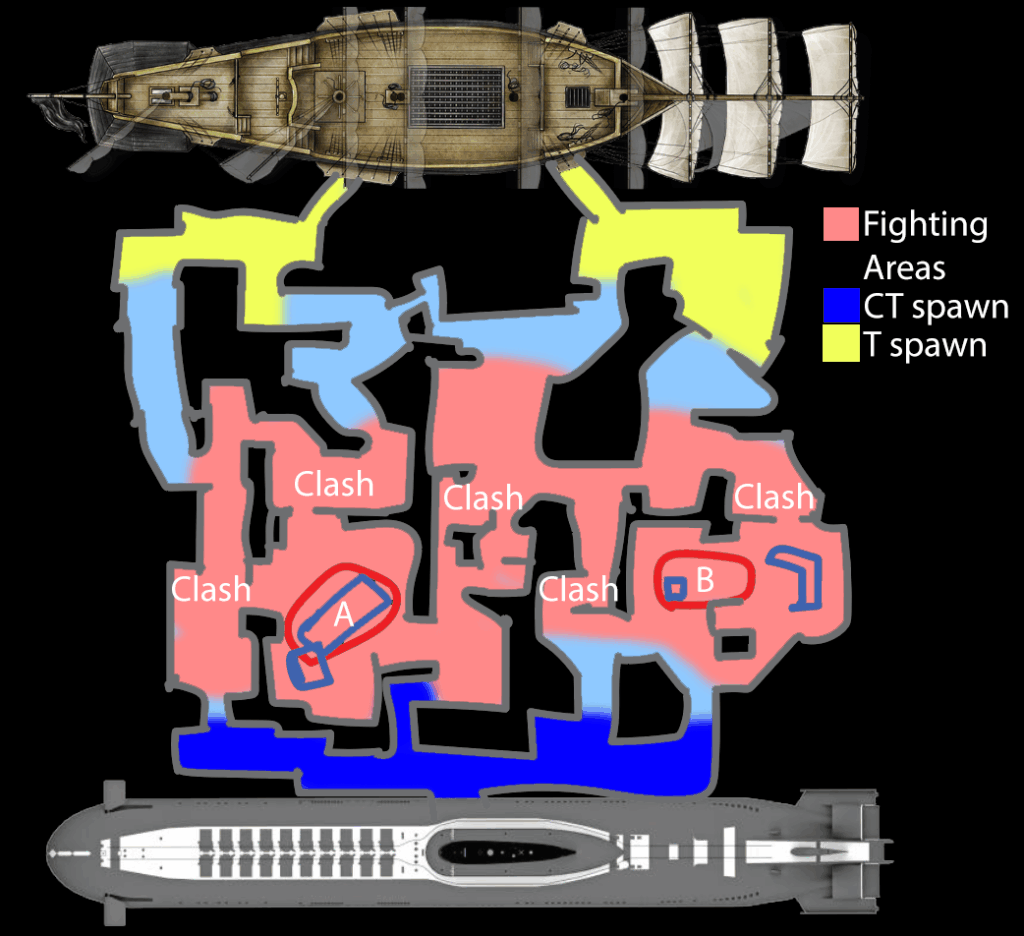
Of course maps naturally tend to favour T or CT (hence why teams switch halfway through), but without early planning it might sway too far in one direction. Of course play testing is the easiest and best way of finding out whether maps work, which I’ll do once I have a playable map.